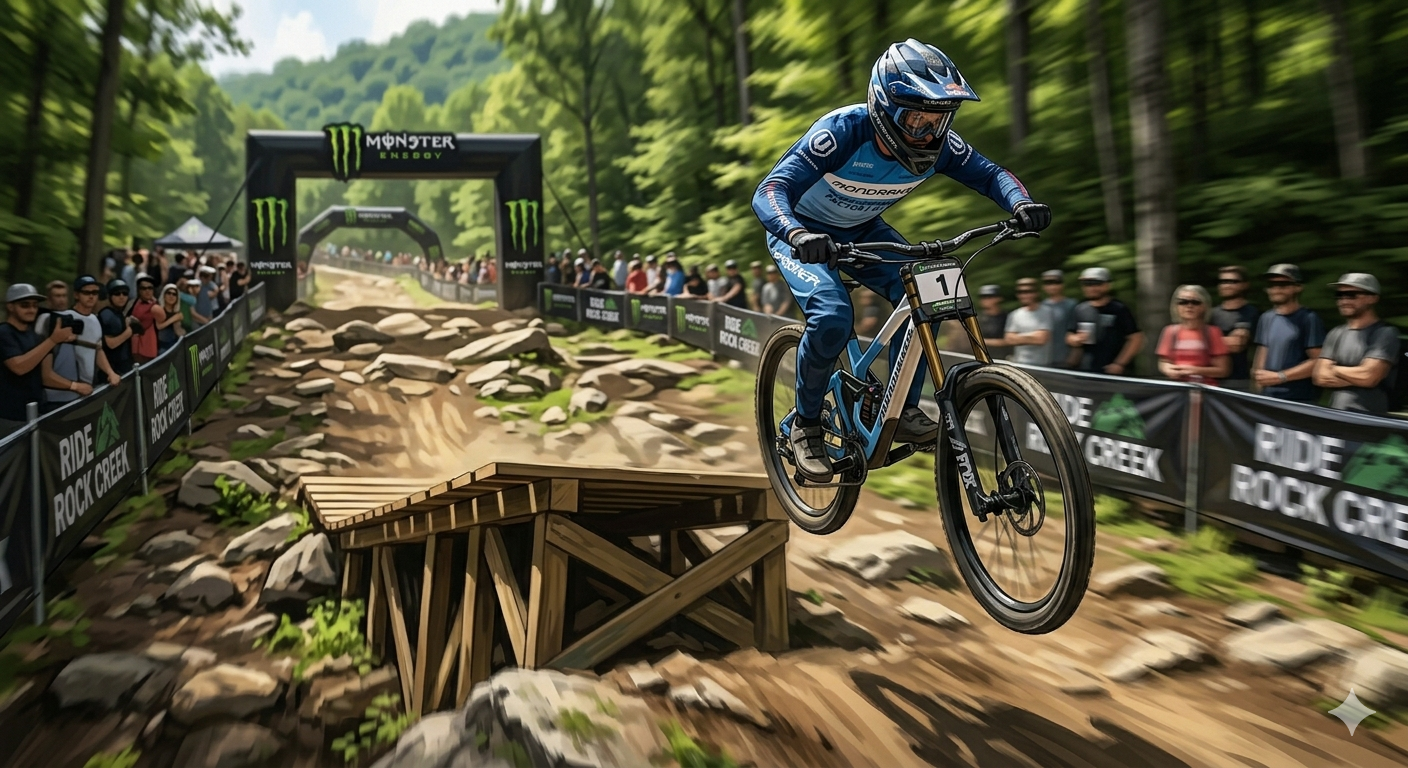
Luca Shaw Brings the Heat
The inauguration of the 2026 Monster Energy Pro Downhill Series on March 28, 2026, at Ride Rock Creek in Zirconia, North Carolina, represents a watershed moment in the professionalization of mountain biking within the United States. By establishing a five-round championship designated as the Official USA Cycling National Downhill Series, the governing bodies have created a robust infrastructure aimed at identifying and cultivating elite talent through a systematic points-based ranking. The first round, sanctioned with a UCI Continental Series (CS) designation, serves as a critical bridge between domestic competition and the international World Cup circuit, providing athletes with the essential UCI points required for global standing.
The selection of Ride Rock Creek as the series opener is a calculated decision rooted in the venue’s purpose-built design and its reputation for delivering high-speed, high-consequence racing. Managed by Neko Mulally, a veteran of the World Cup circuit, the park offers terrain that mirrors the technical intensity found in European venues. The series as a whole is architected to foster a professional environment, featuring equal prize purses for men and women, standardized technical regulations, and a tiered competition structure that integrates amateur growth with elite performance.
| Series Calendar Stop | Venue | Location | Key Sanctioning |
| Stop 1 | Ride Rock Creek | Zirconia, NC | UCI Continental Series |
| Stop 2 | Mountain Creek Bike Park | Vernon, NJ | USA Cycling |
| Stop 3 | Solitude Mountain Resort | Salt Lake City, UT | USA Cycling |
| Stop 4 | Snow Summit | Big Bear Lake, CA | Gravity National Championships |
| Stop 5 | Fox US Open | TBD | US Open / Series Finale |
This structured approach to the 2026 season emphasizes the importance of a centralized national series that can withstand the logistical pressures of a global racing calendar. The professional field attracted international talent, further validating the series’ status as a premier destination for gravity athletes. The intersection of elite racing and the designated “Stampede” track at Rock Creek provides a high-stakes arena where equipment durability and rider precision are tested to their limits.
Analytical Breakdown of the Men’s Elite Competition: Precision and Adaptation
The Men’s Elite finals at Ride Rock Creek showcased a masterclass in tactical aggression and technical consistency. Luca Shaw, representing the Canyon CLLCTV Factory Team, emerged as the victor, clocking a winning time of 1:50.955. Shaw’s victory was not merely a product of raw speed but a result of meticulous sector management. Analysis of the split times reveals that Shaw led through the first three track sectors, establishing a buffer that rendered him nearly untouchable during the finals.
Ryan Pinkerton, riding for Mondraker Factory Racing, secured second place with a time of 1:51.961, finishing 1.006 seconds behind Shaw. Pinkerton’s performance is notable for his late-race surge, particularly in Sector 4, where he posted the second-fastest time, attempting to claw back the deficit established by Shaw in the upper rock sections. Asa Vermette, who had previously dominated the seeding rounds with a 1:53.025, rounded out the podium in third place with a finals time of 1:52.976. Vermette’s inability to match his seeding dominance in the final run highlights the physical and mental fatigue that a high-speed, high-compression course like “Stampede” imposes on even the most prepared athletes.
| Rank | Rider | Team | Final Time | Gap |
| 1 | Luca Shaw | Canyon CLLCTV Factory Team | 1:50.955 | — |
| 2 | Ryan Pinkerton | Mondraker Factory Racing | 1:51.961 | +1.006 |
| 3 | Asa Vermette | Frameworks Racing | 1:52.976 | +2.021 |
| 4 | Ryder Lawrence | Intense Factory Racing | 1:53.889 | +2.934 |
| 5 | Dante Silva | Canyon CLLCTV Pirelli | 1:53.975 | +3.020 |
Beyond the podium, the Men’s Elite field was defined by significant recovery stories and technical challenges. Richie Rude, the reigning EDR overall champion, demonstrated his versatility by qualifying in fourth place. However, a crash during his finals run relegated him to 7th place with a time of 1:54.172. Rude’s ability to remain within the top ten despite a significant incident underscores his status as one of the most resilient riders in the gravity disciplines. The sector results also highlight the performance of Christopher Grice, who secured the fastest time in the fifth and final sector (10.629), indicating a high level of aerobic capacity and the ability to maintain sprinting power at the end of a grueling run.
The Women’s Elite and Junior Dynamic: A Paradigm Shift in Performance
The 2026 season opener at Rock Creek was characterized by a fascinating intersection of age categories in the Women’s field. While Anna Newkirk officially claimed the victory in the Women’s Elite category with a time of 2:06.512, the fastest female time of the entire weekend belonged to Aletha Ostgaard, who competed in the Women’s Junior category. Ostgaard’s time of 2:05.755 was nearly a second faster than the Elite winning time, a statistic that has profound implications for the future of the sport and the rapid progression of junior athletes.
Newkirk, representing Frameworks Racing / TRP, utilized her veteran experience to navigate the high-speed jumps and technical compressions of the “Stampede” course. She led through the first two sectors during the finals, demonstrating superior technical skill in the upper, more rugged portions of the track. However, she was ultimately unable to match the high-speed fluidity of Ostgaard in the lower sectors. Matilda Melton followed in second place for the Elite category with a time of 2:08.857, while Kailey Skelton rounded out the podium in third at 2:09.036.
| Women Elite Results | Rider | Team | Final Time | Gap |
| 1st | Anna Newkirk | Frameworks Racing / TRP | 2:06.512 | — |
| 2nd | Matilda Melton | Yeti / Fox Factory Race Team | 2:08.857 | +2.345 |
| 3rd | Kailey Skelton | 2:09.036 | +2.524 | |
| 4th | Taylor Ostgaard | 2:13.913 | +7.401 | |
| 5th | Frida Helena Rønning | Crestline Speed Shop | 2:14.467 | +7.955 |
The Women’s competition also faced significant attrition. Gracey Hemstreet, a prominent contender who posted the fastest time in Sector 5 during seeding (12.098), suffered a DNF (Did Not Finish) in the finals. Hemstreet’s exit from the race removed a major threat to the podium and altered the early-season points standings significantly. Furthermore, Juli Black also recorded a DNF in the Pro Women’s category, emphasizing the uncompromising nature of the Rock Creek terrain. These incidents highlight the narrow margins for error on a track that demands both extreme speed and tactical restraint.
Junior and Amateur Highlights: Cultivating the Next Generation
The 2026 Monster Energy Pro Downhill Series places a heavy emphasis on development, and the results from the Junior and Amateur categories at Rock Creek suggest a healthy pipeline of talent. Luke Mallen, riding for Outlaw Intense Racing, secured a commanding victory in the Men Junior category with a time of 1:55.329. Mallen’s time was competitive even when compared to the bottom half of the Men’s Elite top 15, signaling his readiness for the professional transition.
The Men Junior podium was completed by Kai Burleson and Tyler Wagoner, both of whom demonstrated consistent pacing across the five course sectors. In the Women Junior category, the dominance of Aletha Ostgaard was the primary narrative, but the performances of Raina Logar and Zanna Logar (both Frameworks Racing / TRP) were equally indicative of a strong developmental program. The Logar sisters secured second and third place respectively, showcasing the benefits of a structured team environment for young athletes.
| Junior Category Standouts | Rider | Time | Team |
| Men Junior 1st | Luke Mallen | 1:55.329 | Outlaw Intense Racing |
| Men Junior 2nd | Kai Burleson | 1:56.426 | |
| Women Junior 1st | Aletha Ostgaard | 2:05.755 | Canyon DH Racing |
| Women Junior 2nd | Raina Logar | 2:14.101 | Frameworks Racing / TRP |
Amateur categories were capped at 350 entries to ensure track quality and safety, a move that reflects the organizers’ commitment to a high-standard racing experience for all skill levels. The inclusion of Cat 2/3 sections and “go-arounds” on the “Stampede” track allowed these riders to compete on the same venue as the pros while mitigating extreme risks. This inclusive model is essential for the growth of the sport in the Southeast United States, providing a clear pathway from youth racing to the professional ranks.
Technological Evolution and Sponsorship Shifts: The Gear of 2026
The commencement of the 2026 season brought with it several significant changes in the equipment and sponsorship landscape. Dakotah Norton made a high-profile move to the Scott DH Factory team, signing a three-year deal that marks a departure from his tenure with Mondraker. Although Norton did not secure the podium at Rock Creek, his transition to the new Scott platform is a major storyline for the season as he adapts his 75mm rise bar setup to the Scott’s kinematics.
Technically, the 2026 Frameworks DH bike has become a focal point of discussion in the pits. Designed by Neko Mulally and ridden by the likes of Anna Newkirk and Asa Vermette, the bike features a unique aluminum front triangle and a carbon rear end. Its adjustable rear travel (204mm to 209mm) and mid-pivot layout are specifically engineered to provide a rearward axle path that assists in absorbing the sharp, square-edged hits common on the Rock Creek course.
| 2026 Frameworks DH Technical Specs | Detail |
| Frame Construction | Aluminum Front / Carbon Rear |
| Rear Travel | 204/206/209 mm |
| Head Angle | 63.0° |
| Wheel Size | MX (29″ Front / 27.5″ Rear) |
| Partnership | Burgtec (Axles, Collars, UDH) |
The industry’s push toward performance optimization was further evidenced by the “SR Suntour Holeshot Award,” which incentivized riders to maximize their speed in the first split. This $500 award highlights the importance of the initial sprint in modern downhill racing, where the race can often be won or lost in the opening twenty seconds. Additionally, the series continues to enforce strict safety regulations, with full-face helmets required and back protectors strongly encouraged, reflecting a professional standard that mirrors UCI international events.
Operational Logistics and the Rock Creek Venue
The successful execution of the Monster Energy Pro Downhill Series at Ride Rock Creek is a testament to the sophisticated operational framework established by the organizers. The event spanned five days, starting with track walks and athlete check-ins on Wednesday, March 25, followed by tiered practice sessions that separated the professional field (Group A) from the various amateur categories (Groups B and C). This scheduling ensured that the “Stampede” track, built off an existing trail at the park, remained in optimal condition for the high-stakes elite finals on Saturday.
Transportation and infrastructure were key components of the event’s success. Located in Zirconia, NC, the venue is accessible via major airports like Asheville Regional (26 miles) and Greenville/Spartanburg International (36 miles), facilitating the participation of international athletes. Spectating was free to the public, though lift access required a separate ticket, fostering a community-centric atmosphere that balanced high-level racing with local engagement.
The prize purse for the series is a significant draw, with $4,000 awarded to the winners of both the Men’s and Women’s Pro categories at each standard round. This financial incentive, combined with the prospect of the massive $15,000 prize at the Fox US Open finale, ensures that the series maintains its status as the most prestigious downhill circuit in North America.
Conclusion: Setting the Tone for the 2026 Season
The first round of the 2026 Monster Energy Pro Downhill Series at Ride Rock Creek has successfully established the competitive hierarchy for the season. Luca Shaw and Anna Newkirk have set the standard in the Elite categories, while the phenomenal performance of Aletha Ostgaard has signaled a generational shift in the speed and capability of junior female riders. The technical demands of the “Stampede” course, coupled with the organizational precision of the series, have validated the decision to professionalize the US national circuit.
As the series prepares to move to Mountain Creek for Round 2, the focus will remain on the adaptability of the athletes to different terrain types and the continued evolution of their equipment. The storylines emerging from Rock Creek—Richie Rude’s resilience, Dakotah Norton’s team transition, and the dominance of the Frameworks development program—will undoubtedly shape the narrative of the 2026 season. With the ultimate goal of the National Championships and the Fox US Open on the horizon, the athletes are now locked into a high-stakes battle for gravity supremacy in the United States.
Highlights for Website and Social Media Publication
Monster Energy Pro Downhill Series Kicks Off at Rock Creek!
The 2026 downhill season officially ignited this past weekend at Ride Rock Creek in Zirconia, NC. Round 1 of the Monster Energy Pro Downhill Series delivered high-speed drama, technical masterclasses, and a glimpse into the future of American gravity racing.
Elite Results:
- Men Elite: Luca Shaw (Canyon CLLCTV) took the top step with a dominant performance, leading through the first three sectors to finish at 1:50.955. Ryan Pinkerton followed in second (+1.006s), with Asa Vermette rounding out the podium in third. Luca Shaw started his career in BMX Racing
- Women Elite: Anna Newkirk (Frameworks Racing / TRP) secured the victory at 2:06.512. Matilda Melton and Kailey Skelton claimed the remaining podium spots in a tightly contested final.
The Speed of Youth:
The story of the weekend was undoubtedly Aletha Ostgaard. Competing in the Women Junior category, Ostgaard posted the fastest female time of the entire event (2:05.755)—nearly a full second faster than the Elite winning time. Keep your eyes on this rising star!
Drama on the Track:
The “Stampede” course lived up to its name, claiming several top contenders. EDR legend Richie Rude qualified strong in 4th but a mid-run crash pushed him to 7th in the finals. Gracey Hemstreet, a favorite after her blistering seeding run, unfortunately suffered a DNF in the final.
Tech & Sponsors:
Dakotah Norton turned heads in his first major outing with the Scott DH Factory team. Meanwhile, the Frameworks Racing crew proved their design prowess, with their 2026 DH frames carrying Anna Newkirk to the win and Asa Vermette to the podium.
What’s Next?
The series heads to Mountain Creek Bike Park in New Jersey for Round 2 in May. Stay tuned as the race for the National Title heats up!
#ProDownhillSeries #USDH #RideRock Creek #MonsterEnergy #MTB
uci.org UCI Mountain Bike Continental Series – Monster Energy Pro Downhill Series
usacycling.org Downhill National Series – USA Cycling
prodownhillseries.comCOMPETITION DETAILS – Monster Energy Pro Downhill Series
en.wikipedia.org2026 UCI Mountain Bike season – Wikipedia
bikereg.comMonster Energy Pro Downhill Series – Ride Rock Creek Online Registration
pinkbike.comCourse Preview for the Monster Pro Downhill Series Round 1
pinkbike.comLuca Shaw & Aletha Ostgaard Take Top Honors at High-Speed
bikemag.comDakotah Norton Wins First Monster Pro Dh Series Race – BikeMag
cyclingmagazine.caCanadians crack the top 10 as Pro Downhill Series opens in Rock Creek
mtbdata.comGracey Hemstreet – MTB DATA
feeds.buzzsprout.comThe Inside Line Podcast – Vital MTB – Buzzsprout
pinkbike.comFrameworks Announces 2026 Enduro & DH Bikes – Pinkbike