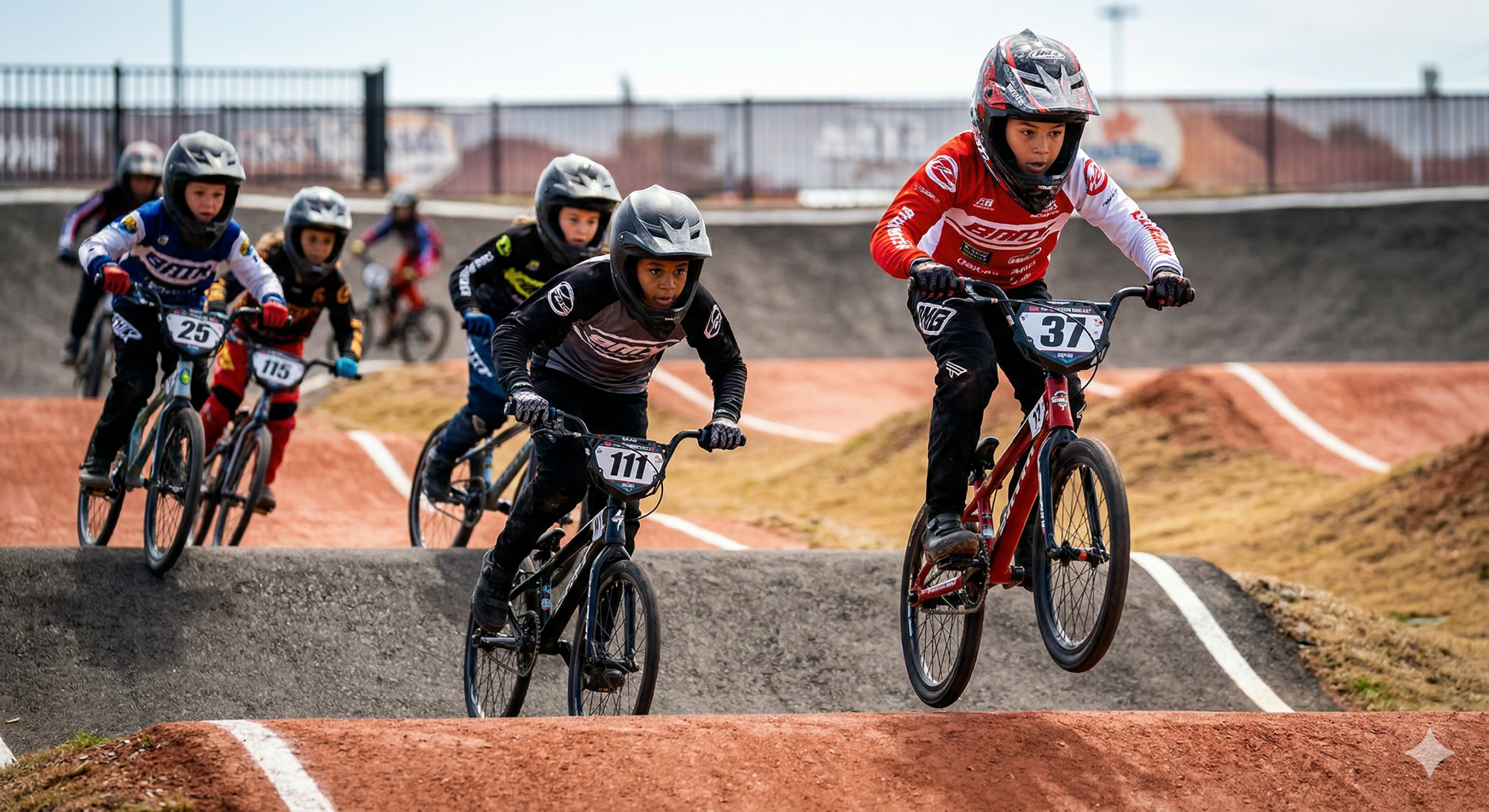
As park and recreation directors, we are constantly seeking out the best ways to expand our communities’ recreational offerings and promote active lifestyles. While dirt pump tracks and sprawling bike parks have become popular buzzwords in municipal planning, jumping straight into these projects might be a misallocation of your community’s resources. If you want a healthy, bike-literate, and globally competitive community, you must start in with a sanctioned BMX race track. Here is why investing in a BMX track should be your foundational step in community cycling infrastructure.
The Pump Track Reality Check
Before breaking ground on a basic pump track, directors must consider the long-term reality of these amenities. Dirt pump tracks may seem low-cost initially, but they demand constant, skilled maintenance to prevent weather erosion and dangerous surface degradation. Even paved pump tracks require massive upfront investments and specialized engineering; a poorly executed design will lack “flow” and quickly become an unridden eyesore.
Furthermore, while pump tracks are frequently billed as serving “all ages and abilities,” the reality is that they are often monopolized by younger kids and scooter riders, which can limit their appeal to the broader community. A dedicated BMX race track, however, provides a unique, highly structured sporting experience that a casual pump track simply cannot replicate.
Maximum ROI: High Density and Low Barriers to Entry
When allocating limited public land and recreational budgets, spatial and financial efficiency are paramount. A BMX track offers the highest “Athlete-per-Square-Foot” return of any cycling facility. A competive track requires less than three acres of land, yet it has the capacity to serve hundreds of local youth every single week.
BMX also breaks down the steep financial barriers typically associated with cycling. While getting into mountain biking might require a $5,000 bicycle, a sub-$200 entry-level bike is all a child needs to start racing BMX (Or even the bike in your garage!). This low barrier to entry makes the sport incredibly accessible to a much more diverse demographic within your municipality.
Building “Pilots” and Creating Safer Communities BMX isn’t just about racing; it is about unparalleled safety and skill acquisition. While other cycling disciplines focus on building the “motor” (aerobic capacity), BMX focuses heavily on developing the “pilot”. Riders learn crucial “Biological Bike Handling” skills—like how to generate speed without pedaling, how to confidently navigate high-speed traffic in a pack, and how to save a sliding bike.
By providing a controlled environment to learn these high-pressure maneuvers, BMX tracks create confident, life-proof cyclists who are significantly less likely to have accidents on public roads or trails.
The Economic and Educational Pipeline
A BMX track is an undeniable economic and community engine. Operating under established sanctioning bodies like USA BMX provides structured competition, clear rules, and an organized environment. Because of this structure, local tracks can host regional and national events, bringing hundreds of families and substantial tourism revenue to your local businesses. Unlike the solitary nature of road cycling or mountain biking, a BMX track creates a localized “stadium” environment where families gather and stay for hours, fostering a deep sense of community.
The benefits also extend far beyond the finish line. BMX racing is a recognized recruitment pipeline for collegiate athletic scholarships. Institutions like Lindsey Wilson College, and Marian University actively recruit BMX athletes because their superior technical skills easily cross over into other collegiate cycling disciplines. By building a track, you aren’t just building a park—you are building a pathway to higher education for your community’s youth.
The Proven Foundation of Champions If your community eventually wants a thriving bike park or downhill racing scene, you have to build the foundational skills first. The data proves it: Half of the world’s top 20 Downhill Mountain Bike pros and an astounding 100% of all UCI Pump Track World Champions started their careers in BMX racing. It is the ultimate nursery for cycling talent.
A well-planned BMX track is not merely a single-purpose facility; it is the most efficient engine for creating lifelong cyclists. Before you invest in a pump track or a sprawling trail system, lay the proper foundation. Build the BMX track, and watch your community’s cycling culture truly take off.